
.svg)


Free Zones in Egypt

When industrial and investment companies evaluate expansion opportunities, the decision should not be limited to the lowest rental rate or the closest location. The more important question is whether the chosen location provides an operating framework that reduces cost, accelerates procedures, improves the movement of goods and capital, and enhances access to regional and international markets.
This is where Egypt’s free zones become highly relevant. They are among the most practical investment platforms for industrial companies, logistics operators, export-oriented businesses, and investment firms seeking a more competitive operating model.
Free zones are not merely industrial or administrative spaces within fenced areas. They are a special investment regime within the territory of the Egyptian state, subject to Egyptian sovereignty and administrative control, while benefiting from specific customs, tax, and monetary rules. This allows companies to operate in an environment closer to international manufacturing, logistics, and trade platforms.
The Egyptian free zone system is governed by Investment Law No. 72 of 2017 and its executive regulations, and is supervised by the General Authority for Investment and Free Zones, known as GAFI.
Why Free Zones Have Become a Strategic Choice
Industrial companies today face three major challenges: rising production costs, increasingly complex supply chains, and stronger competition in export markets. At the same time, investment companies are looking for operating assets that can generate stable cash flow, support long-term growth, and serve real demand from productive and export-driven businesses.
In this context, free zones in Egypt offer a combined value proposition. They do not simply provide space; they provide a complete operating framework that combines location, incentives, infrastructure, procedures, and export potential.
This model has become even more important as Egypt continues to invest heavily in roads, ports, utilities, and logistics infrastructure, while also benefiting from trade agreements that provide access to broad markets across Africa, the Arab region, Europe, and other international destinations.
Key Advantages for Companies Operating in Free Zones

The first major advantage is the customs and tax treatment. Capital assets, equipment, and production inputs required for activity inside the free zone enjoy important exemptions from customs duties and certain taxes. In addition, imports and exports from and to foreign markets receive special treatment. This directly affects operating cost, especially for companies that import components or raw materials and then re-export finished or semi-finished products.
The second advantage is the ease of movement of goods. Projects inside free zones operate through a structured process for importing and exporting goods, issuing import and export declarations, and dealing with customs procedures through the free zone administration. This is especially important for companies with repeated supply cycles, frequent shipments, or strict export delivery commitments.
The third advantage is dealing with a single administrative authority. One of the most important features of free zones is that the free zone administration manages key approvals, activity licensing, reservation and handover of land or space, building permit procedures in public free zones, and project-related amendments. In many cases, this administrative efficiency can be as valuable as the financial incentives themselves, because saving time and reducing the number of authorities involved can lower indirect costs and operational risk.
The fourth advantage is infrastructure readiness. Public free zones in Egypt are usually equipped with essential infrastructure, including roads, electricity, water, sewage, telecommunications, customs units, and security. This makes them suitable for companies that need a higher level of operating readiness compared with raw industrial land.
The fifth advantage is investment protection and regulatory clarity. The system provides a defined legal and administrative framework for investors, making the investment decision more measurable and more acceptable to foreign companies and institutional investors.
Which Companies Are Best Suited to Free Zones?
Free zones are particularly suitable for export-oriented manufacturers, assembly companies, packaging companies, warehousing and re-export operators, logistics companies, and certain service or technology businesses connected to international markets.
They may also be suitable for investment companies seeking operating assets linked to industrial, logistics, or export-supporting activities.
However, free zones are not necessarily the right option for every company. If a company’s sales are directed mainly or entirely to the domestic market, the company must carefully assess the implications of selling locally from a free zone, including any applicable customs, tax, or regulatory treatment.
Therefore, free zones should not be viewed as a universal solution for every project. They should be seen as a powerful operating tool when the company’s activity is aligned with export, cross-border services, international supply chains, or logistics-driven business models.
Administrative and Industrial Unit Prices in Free Zones
Prices inside free zones vary according to the location, type of space, condition of the unit, size, finishing level, proximity to ports or Cairo, access to labor, type of activity, contract duration, and payment terms.
For administrative units, indicative market rental rates generally range from USD 100 to USD 350 per square meter per year. Payment is often made quarterly in advance, depending on the specific offer, free zone, unit, and contract terms.
For industrial units, indicative rental rates may start from approximately USD 11 per square meter per year and may reach up to USD 220 per square meter per year in certain cases. The final rate depends on the free zone, the rented area, and whether the space is industrial land, a ready-built factory, a warehouse, or a specialized unit with particular specifications such as ceiling height, power capacity, loading access, fire systems, entrances, or handling areas.
It is important to distinguish between the quoted rental rate and the real total occupancy cost. A company should calculate electricity, water, insurance, fit-out, modifications, guarantees, service charges, transportation cost, and the time required to obtain approvals. In some cases, a higher-priced unit may be more efficient if it is ready for operation and saves several months of preparation.
The Most Important Free Zones in Egypt by Investment Relevance
The following order is not an official government ranking. It is a professional investment ranking based on location value, market demand, proximity to ports or Cairo, activity profile, and suitability for industrial and investment companies You can also learn about the differences between free zones in Egypt and the world.
1. Alexandria Public Free Zone – Amreya
Alexandria ranks among the most important free zones in Egypt from an industrial and export perspective. Its proximity to Alexandria Port and Dekheila Port, combined with a strong industrial and commercial base, makes it highly suitable for export industries, warehousing, re-export, and international trade-related activities.
Alexandria’s free zone is also one of the strongest performers in terms of export value, making it a strategic option for companies targeting Mediterranean, European, and global markets.
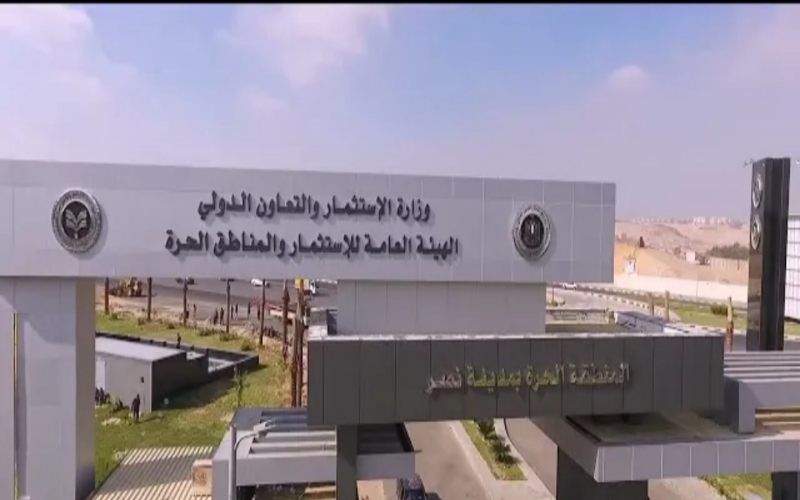
2. Nasr City Free Zone – Cairo
Nasr City Free Zone has a different type of importance. It is particularly valuable for companies that need proximity to Cairo, the airport, central management, banks, corporate clients, and professional services.
It is especially suitable for administrative offices, service companies, high-value activities, export-supporting services, and operations that need to remain close to Greater Cairo’s decision-making and business environment.
3. Suez Public Free Zone
Suez is one of the most strategic locations for industrial and logistics companies due to its proximity to the Suez Canal, Red Sea ports, and major industrial areas.
It is suitable for manufacturing, warehousing, logistics services, energy-related activities, and trade with Asia, the Gulf, and East Africa. For companies where port access and logistics efficiency are critical, Suez can offer a strong competitive advantage.
4. Port Said Public Free Zone
Port Said has a strategic position at the northern entrance of the Suez Canal on the Mediterranean side. It is suitable for international trade, warehousing, re-export, and activities connected to container traffic and maritime logistics.
It is particularly relevant for companies dealing with Europe, the Eastern Mediterranean, and international shipping routes.
5. Ismailia Public Free Zone
Ismailia benefits from its central position within the Suez Canal corridor. It offers a balanced location between Cairo, East Delta, Sinai, and Suez.
This makes it attractive for companies seeking a potentially more cost-efficient location while still benefiting from strong logistical connectivity.
6. Damietta Public Free Zone
Damietta is important for companies connected to port activities, exports, furniture, wood industries, warehousing, and activities benefiting from the industrial and commercial base of the Delta and northern Egypt.
Its strength comes from its port access and the established industrial culture of the surrounding area.
7. Media Public Free Zone – Media Production City
This free zone has a specialized nature compared with traditional industrial free zones. It is suitable for media, production, broadcasting, digital services, creative companies, and certain administrative or technology-based activities connected to service exports.
For companies operating in media, content, digital platforms, or creative industries, this zone offers a differentiated operating environment.
8. Shebin El-Kom Public Free Zone
Shebin El-Kom is suitable for companies looking for a Delta-based location with competitive operating costs and access to labor and nearby industrial markets.
It may be appropriate for light and medium industries, warehousing, and supporting services.
9. Qift Public Free Zone – Qena
Qift is important from an Upper Egypt development perspective. It may be suitable for companies seeking lower operating costs, access to Upper Egyptian markets, proximity to certain raw materials, or future expansion opportunities in southern Egypt.
It is also relevant for investors interested in regional development and cost-sensitive industrial operations.
10. New and Targeted Free Zones
Egypt has also been working on new and targeted free zones in areas such as Minya, Badr, and Nuweiba.
Each of these locations has different future potential. Badr benefits from proximity to Cairo, Cairo International Airport, the Suez Road, and Ain Sokhna corridors. Minya can serve Upper Egypt. Nuweiba has a strategic position linked to Sinai and the Gulf of Aqaba.
These new areas may become increasingly important as Egypt continues to expand its industrial and logistics map.
How Companies Should Choose the Right Free Zone

The right choice should begin with the operating model, not with the property itself.
A company should first answer five core questions:
What percentage of production is expected to be exported? What raw materials or components will be imported? Which port or airport best serves the supply chain? What level of labor is required? What type of space is needed: an office, warehouse, ready-built factory, land plot, or industrial unit requiring fit-out?
After that, the company should prepare a financial and operational comparison between different free zones. It is not enough to compare the rental rate per square meter. The company must compare total occupancy cost, preparation time, infrastructure quality, approval procedures, transport cost, labor availability, and future expansion potential.
In many cases, the most attractive free zone is not necessarily the cheapest one. It is the one that provides the best combination of cost, time, access, compliance, and scalability.
To understand the difference between the types of free zones and industrial zones in Egypt
The Role of NileEstate in Free Zone Property Search
NileEstate platform is one of the important real estate platforms specialized in presenting available units inside free zones, Top Industrial Zones in Egypt, and commercial areas in Egypt.
This is particularly valuable for companies that are not simply looking for a standard property advertisement, but for an operational opportunity that matches their activity, licensing requirements, and procedural needs.
The value of NileEstate is not limited to displaying units. Its real advantage lies in understanding the relationship between the property and the procedure. An industrial company does not need only an office or factory. It needs a licensable location, a suitable space for its activity, clear documentation, an understanding of free zone requirements, and a practical route from inspection to negotiation and then to procedural completion.
Through practical experience in dealing with industrial and administrative units, as well as local and foreign investors, NileEstate can help companies filter available options, compare prices, arrange inspections, understand the differences between free zones, and prepare the required information for a more accurate investment decision.
Conclusion
Free zones in Egypt are not merely an alternative location for factories or offices. They are a strategic operating platform for companies involved in export, manufacturing, warehousing, logistics, and regional expansion.
Their true value appears when the company selects the right zone and the right unit based on its operating model, not only on price.
A company that chooses the right free zone can reduce operating costs, accelerate import and export cycles, improve competitiveness, and establish a more structured presence in Egypt and international markets. On the other hand, a poorly studied decision may lead to a unit with an attractive price but poor suitability for the activity, weak supply-chain connectivity, or limited expansion potential.
For industrial and investment companies, the best approach is to combine three elements: accurate legal and procedural understanding, financial and operational analysis of total occupancy cost, and specialized real estate advisory based on field experience.
This is where specialized platforms such as nileestate can play a critical role by connecting the investor, the property, and the procedure, helping companies access suitable units inside Egypt’s free zones and make safer, more professional investment decisions.
0 Comments
Recent Blogs
A Project Sheikh Zayed
Read more

Usufruct Rights in Commercial and Industrial Land in Egypt
Read more

Types of Free Zones and Industrial Zones in Egypt
Read more

Egypt’s New Investment Laws 2026
Read more

Free zones in Egypt and the world
Read more
Nasr City Public Free Zone
Read more
Popular Tags
- Why Free Zones Have Become a Strategic Choice
- Key Advantages for Companies Operating in Free Zones
- Which Companies Are Best Suited to Free Zones?
- Administrative and Industrial Unit Prices in Free Zones
- The Most Important Free Zones in Egypt by Investment Relevance
- 1. Alexandria Public Free Zone – Amreya
- 2. Nasr City Free Zone – Cairo
- 3. Suez Public Free Zone
- 4. Port Said Public Free Zone
- 5. Ismailia Public Free Zone
- 6. Damietta Public Free Zone
- 7. Media Public Free Zone – Media Production City
- 8. Shebin El-Kom Public Free Zone
- 9. Qift Public Free Zone – Qena
- 10. New and Targeted Free Zones
- How Companies Should Choose the Right Free Zone
- The Role of NileEstate in Free Zone Property Search
Leave Comment